How to Ink in a Comic Book Art Style
Gather 'round, children, and I'll tell you lot a tale old as time. When I was a young lad, I wanted to make a superhero comic, and I thought at the time there was only one program that was capable of digitally replicating the existent pens that liked to ink with. Then I heard of a little program called Manga Studio. "Only expect," I thought. "This couldn't exist for me!" I wanted to make superhero comics. Those classic American comics with good versus evil, strongmen in tights, all that stuff! Non manga!
Well, boy was I wrong. Manga Studio or, as it'south now known, Clip Studio Paint is actually built to be completely style-agnostic. Manner, it seems, comes from the artist, not the tools, and Clip Studio Paint has a wide diversity of fantastic tools that you can use to brand comics.
In this commodity, I want to talk about the three tools near American comic creators use to traditionally ink their comics, and how you lot tin use Clip Studio Paint to replicate those tools digitally.
Tools of the Merchandise
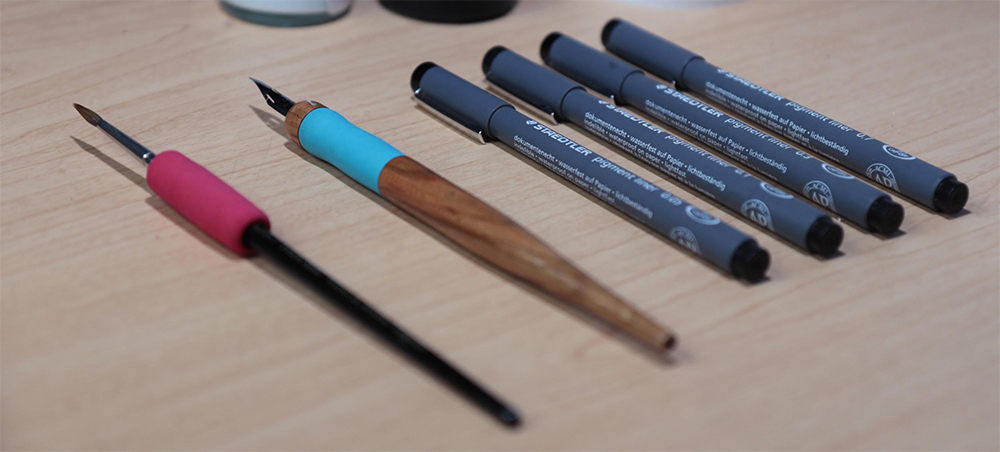
Obviously, whatever tool that transfers ink onto paper is a viable mode to ink your comics, but there are iii types of tools that (in my experience) American comic book creators use to ink their superhero comic work.
Firstly, you take a Brush. Most comic creators I talk to that employ a brush will utilize a Kolinsky sable-hair brush, sized 1, 2 or three. A Kolinsky is a blazon of weasel, whose pilus is very fine and, when put into a brush, forms an incredibly fine tip. These brushes are able to create very thin lines every bit a upshot, just can likewise spread out to very thick lines, especially if you're using a Size 2 or 3 brush.
Brushes have the widest range of all the tools we're going to talk virtually today, and, although that can be very handy in an all-in-one tool, it tin can also be very difficult to control and create consequent line weights.
Second on the list, we have the Dip Pen. Most oftentimes, I run across American comic creators using a G-Pen fashion of dip pen. The G-Pen consists of a nib holder and a replaceable metal nib that is dipped in ink. The pecker is split at the end, so that when pressure is applied, that divide widens and more ink goes onto the page. Because of the metal build, pressure won't widen the stroke as much as a brush, just you tin can still go a expert amount of size variance. And nibs that haven't been used very much tin can go some very precise thin lines, besides.
Lastly, a lot of comic creators will use Multiliner Pens for their superhero comics. These pens are based off the old cartridge-based metal multiliner pens, where a metal tip would exist pushed into the pen opening, allowing ink to flow out at an even rate, theoretically creating fifty-fifty lines.
These pens are pretty famous for being finicky, though, then at that place is a wide variety of felt-tip multiliner pens that create fairly consistent lines without the run a risk of ink rushing out or splattering everywhere. These are ready at certain sizes, like 0.one, 0.3, 0.5, etc., with each number relating to the millimeter size of the line it creates. While these pens do have a slight variance, it's non nearly as much equally a K-Pen or Brush.
These tools are all fantastic… until you desire to hitting the Undo button. Luckily, they all can be easily replicated in Clip Studio Pigment!
Most Clip Studio Pigment
For this tutorial, I'm using Clip Studio Paint, a versatile software for illustration, comics, and animation. It comes with a range of digital fine art tools and brushes and then y'all can kickoff drawing with it correct out of the box. There is too a version bachelor on the iPad.
https://www.clipstudio.net/en/purchase/trial
Inking with a Brush
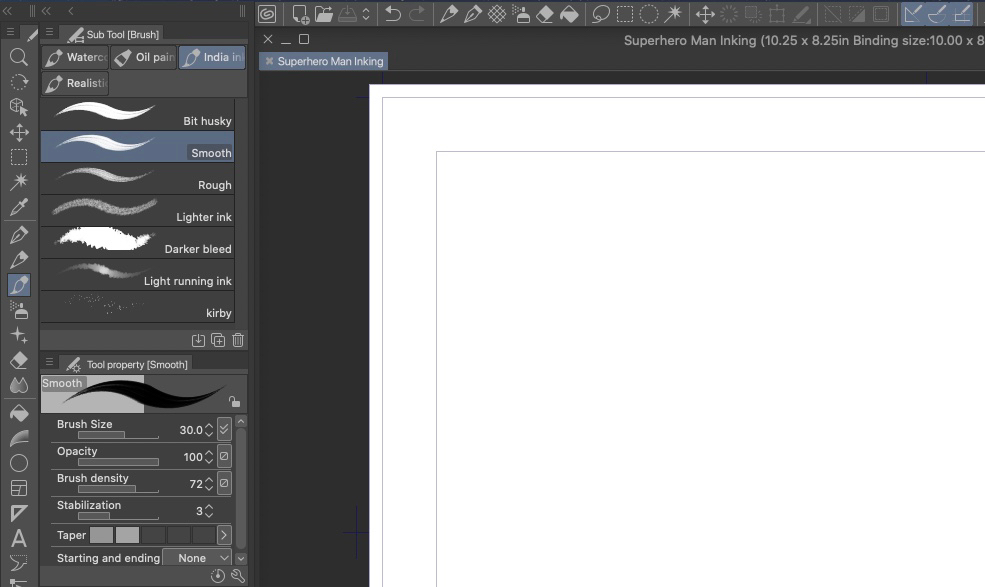
Right out of the box, Clip Studio Paint has a number of India Ink Brushes that work keen for making superhero comics. Personally, I'm a big fan of the India Ink Polish, because of its clean lines and subtle texture.
I would encourage you to see what the default settings of these tools behave similar in a few drawings earlier earthworks in to customize them. Sometimes knowing what a tool behaves similar helps y'all figure out what you really wish yous could modify most information technology.
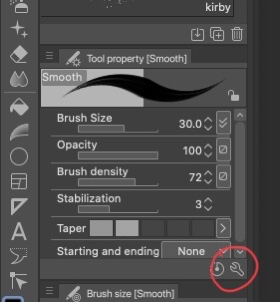
Once you've had some practice, though, feel complimentary to hit the wrench icon on the Subtool Palette with the Tool you want to edit selected.
In the Subtool Detail panel you'll detect all sorts of ways to customize your brush, including the Brush Size Curve, Opacity, and some helpful line-correction settings similar Starting and Ending.
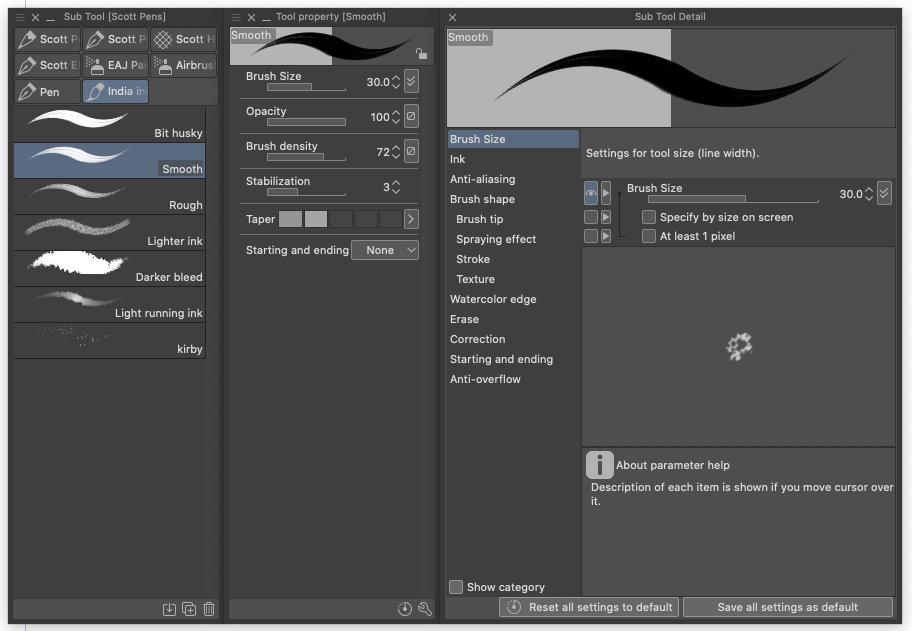
Setting the Brush Curve similar this could get you some nice fine lines at low pressure, only really expand out if you push button hard! Play around with this and customize it to get a tool that works for you.
Inking with a G-Pen
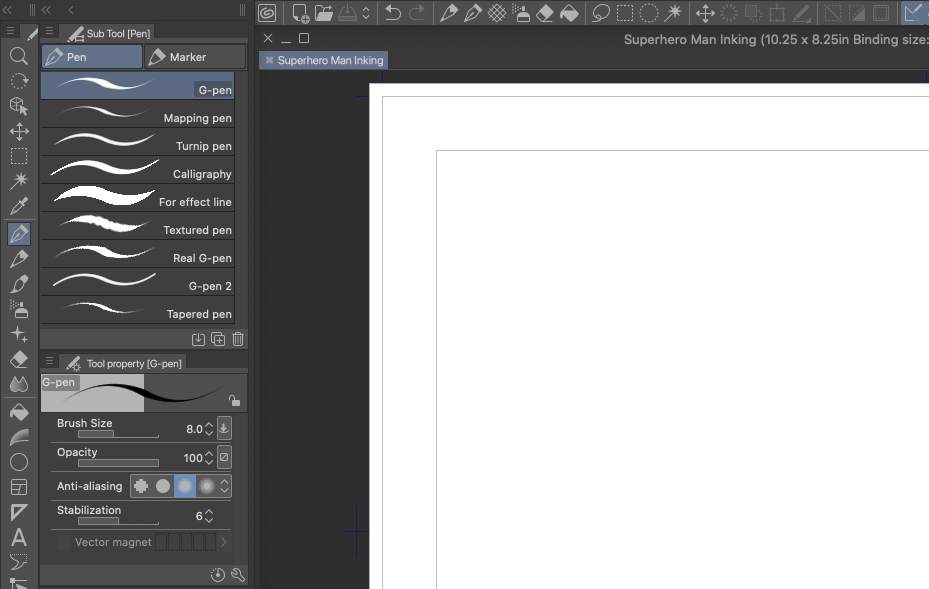
To get the expect of a K-Pen, look no further than the built-in Grand-Pen in the Pen Subtool. This tool volition give overnice and thin lines if yous employ light force per unit area, only will still expand out if you push down hard, although non as far every bit the Brush. Simply that'south what you lot want, since G-Pens bear that way in real life!
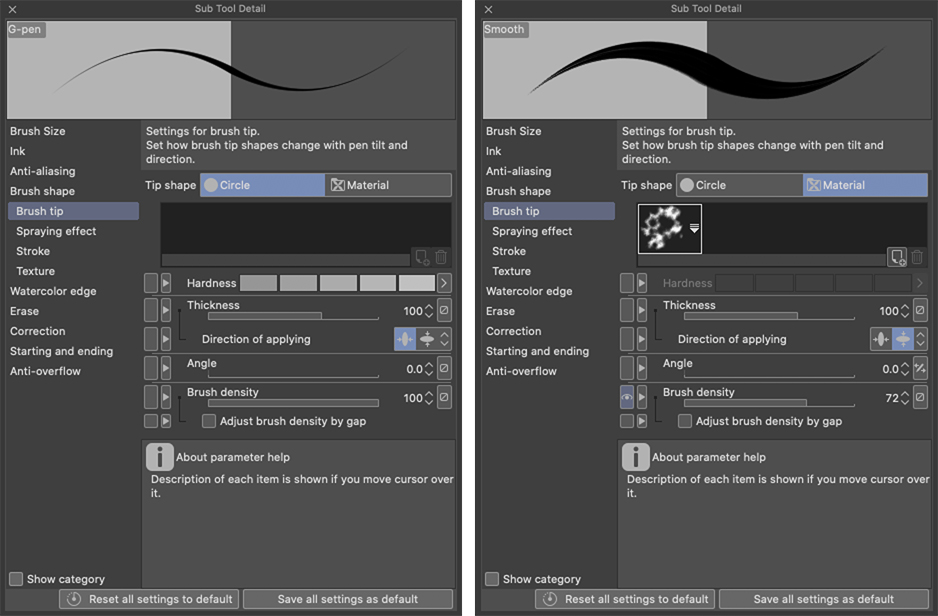
This particular tool uses a Circumvolve Tip to create fifty-fifty smoother lines, as opposed to the Smooth India Ink Brush, that has a bit of texture to its tip. This makes for very crisp and precise lines, but tin can experience artificial if sized up besides far.
So, when using this G-Pen, I'd recommend keeping information technology sized relatively low. The default is 5 pixels, which might be a scrap modest (more of a Maru nib than G nib), but I wouldn't push it past 12 or xv pixels on a 600 dpi canvas. In the demo beneath, I used an eight-pixel version, and information technology got a good corporeality of line variance.
Inking with a Multiliner
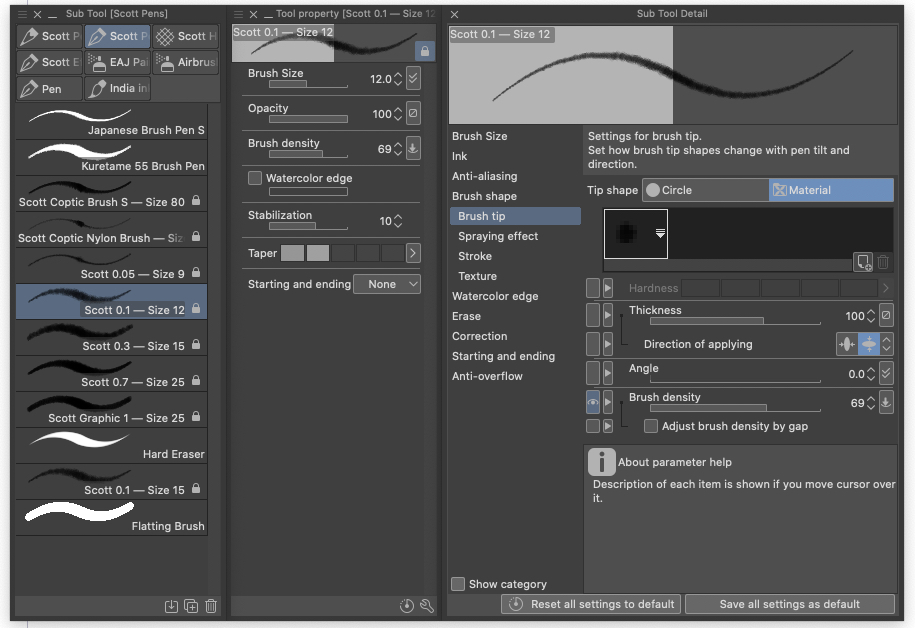
Lastly, let's talk about Multiliners in Clip Studio Paint. These aren't born past default, but I made my ain, since I use these types of pens pretty often in real-life inking. You can download them on my Gumroad site here.
These are fabricated to emulate the consequent width of existent-life Multiliners. They have a texture for each tip that I scanned from the real-life tools and tried to size according to real marks that I fabricated on a flake piece of paper. So the 0.one will have a much thinner line than the 0.3, but too notation how the 0.3 won't become quite as sparse a line, fifty-fifty with light force per unit area, similar the Brush or G-Pen.
That's the primary difference betwixt the Multiliners and the Brush or G-Pen: with the Multiliners you cull the right size for the lines you want to make, as opposed to trying to use force per unit area to become consequent sizes with the Castor or Grand-Pen.
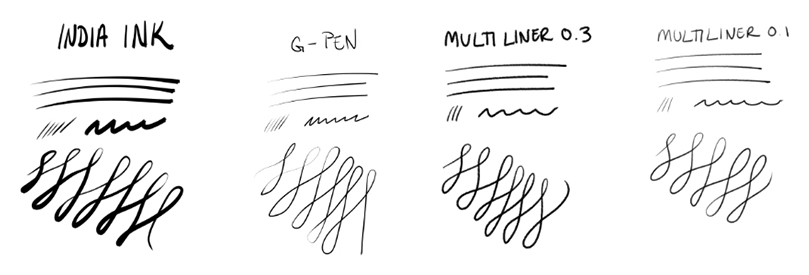
Neither is meliorate than the other, though! It'south all most using the right tool for the right look. And when inking superhero comics in a classic American style, there are a few things that I always attempt to keep in listen.
Tips for Emulating an American Style
Tip #1: Continue your light source in mind at all times.
Information technology'south easy to call up inking should be merely like penciling, where you only draw the shapes every bit they are. But really dynamic inking is set up autonomously by making certain your line thickness relates to the amount of light that is hitting that side of your subject.
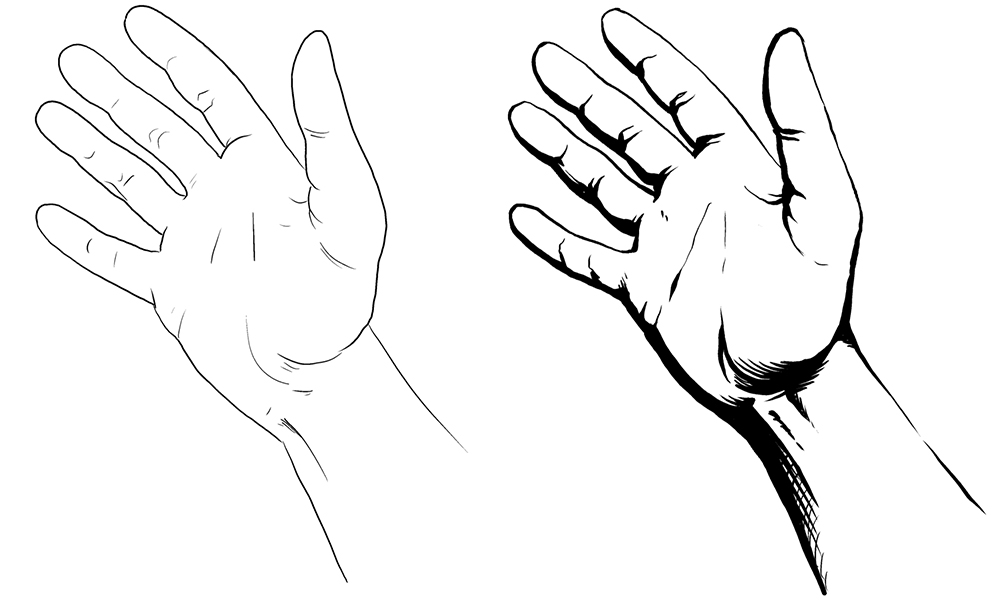
You lot can run into in the above instance, on the left the mitt is inked evenly, so the viewer has no thought where the light might be coming from. The hand on the right, however, is inked while keeping the lighting in mind. Y'all can tell past the thin lines facing the light and the thick lines facing abroad from it where the calorie-free source is coming from.
Tip #2: Push your Spotted Blacks
Similarly, when inking your superhero comics, try to button the amount of spotted black you lot accept in your finished piece. Spotted blacks can exist scary when starting out, because y'all think, "I spent all this time figuring out where things get, and you lot but want me to cover information technology upwardly!?" But when used well, spotted black areas can create some really dynamic values to push your inking to the side by side level.
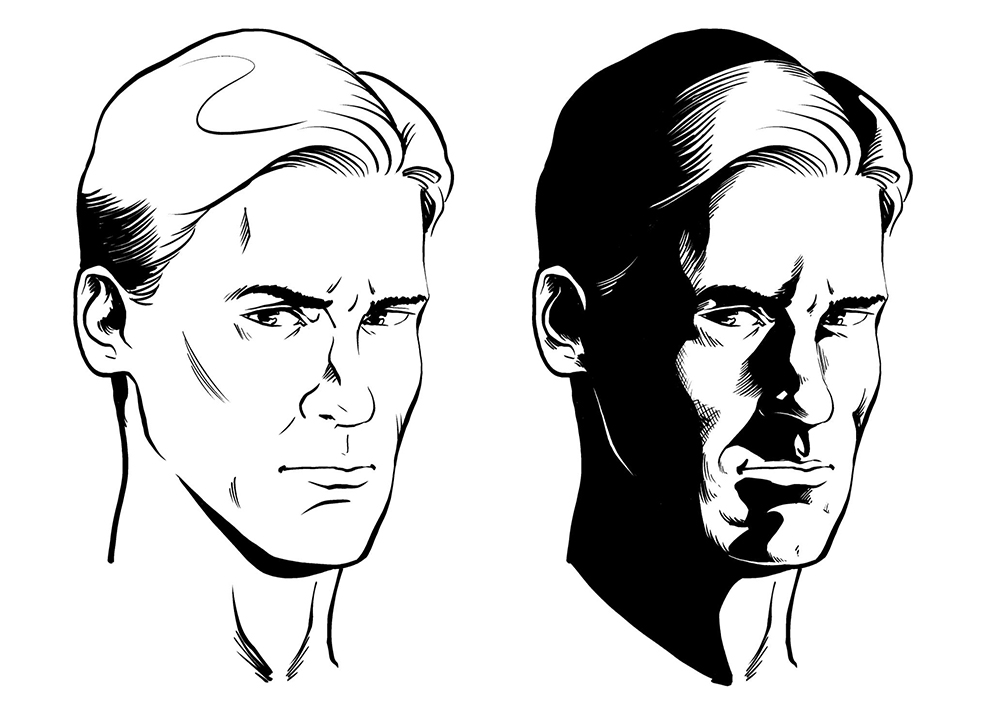
Spotted blacks really help show the value of objects at the inking phase, in a mode that will enhance colors later on. If a character's pilus is dark brown, don't outline the hair and then fill it in dark brown afterward! Your colors will stop up also shut to your inks and it will look incredibly dirty. Instead, employ some spotted blacks in the hair to show the values (and the direction of the light), then when you get to the color stage, y'all can use lighter colors that will compliment your inks.
If yous're a bit hesitant to ruin your drawing, you can ever put your spotted blacks on a different layer than your regular inks! That way, y'all can test out some dissimilar ideas while saving your initial cartoon. Sometimes more spotted blacks are ameliorate, since the erstwhile inking adage is "when in doubtfulness, black it out!"
Tip #3: Pull your feathering into your spotted blacks, not out from them.
I got this tip from a pro inker at a New York comic convention, and it was similar a calorie-free seedling flared on in my caput!
Feathering is the process in inking where yous have a bunch of lines that go sparse to thick that, from a distance, end upwards looking similar more of a tone than a total blackness or white area. This is used a lot to show gradation, since ink is really merely either black or white.
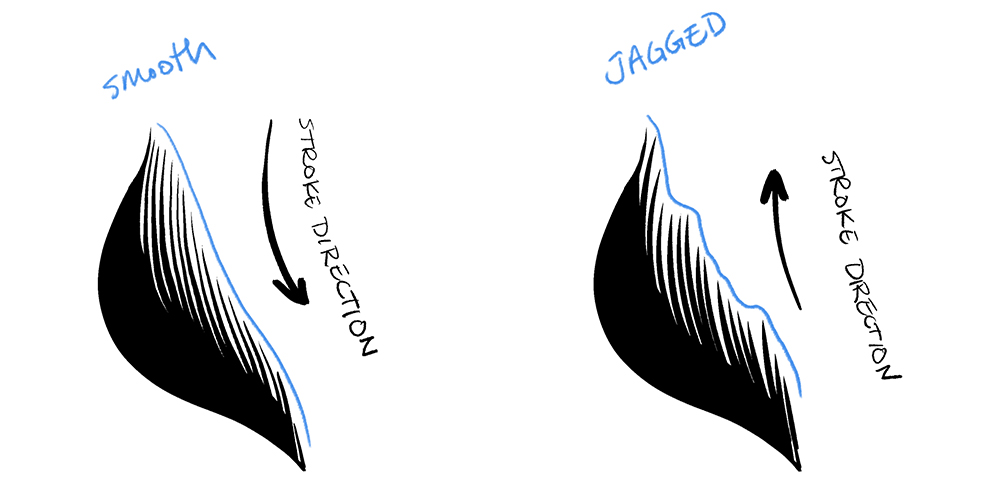
When yous're doing this, offset from the furthest function of the feathering and ink into the darkest part. A lot of times new inkers (myself included!) will showtime at the darkest part and flick the pen outward to get dynamic lines. While this may have a lot of energy, it makes information technology nearly impossible to have the ending points of those feathering lines consistent.
Instead, attempt starting at the thinnest point and working back into the spotted blackness expanse. This way, you tin have a consistent fall-off for your lines and they will await much cleaner and more professional.
Tip #4: Keep Inking Castor Textures Consistent with the Transparent Swatch
The best part nigh working digitally is that Undo button, but sometimes you lot merely want to carve out parts of your drawing without going back a ton of steps and doing a lot of rework. Sometimes switching to the eraser makes sense, but a lot of erasers don't mimic the texture of your inking tools, so this doesn't await nearly as clean.
To avoid this, I frequently utilize the Transparent Swatch with my inking tools. This way, it erases the black parts of my cartoon, but the edges still experience like they were inked.
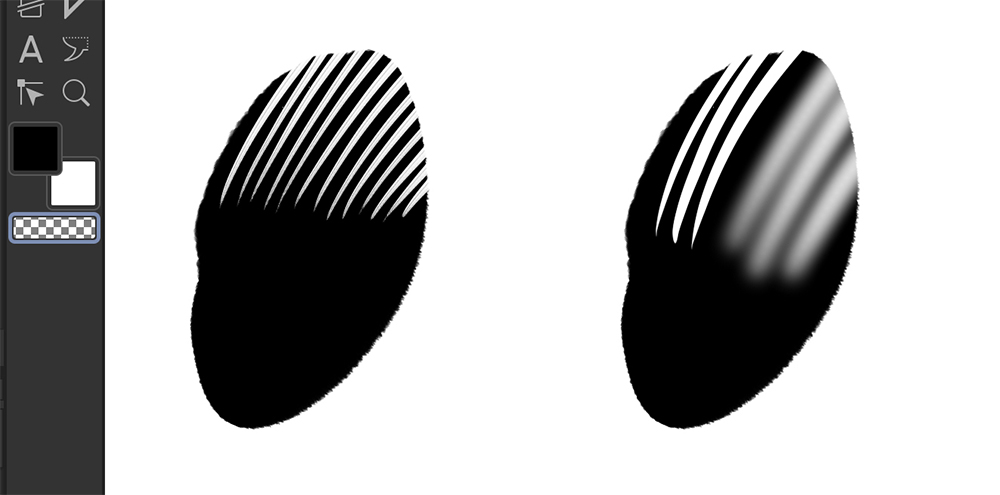
On the far left, you can see that I've selected the Transparent Swatch under the Foreground and Groundwork Swatches, which are black and white.
In the dot on the left, I've cutting back into it with the Smooth India Ink Brush, so those ink lines retain the texture of the castor. On the right, I'm using the Hard and Soft Erasers, which don't have that texture and don't quite fit, giving information technology a little bit of a mechanical look. See the deviation?
Putting It All Together
What kind of article would this be without a demo?
Allow'southward put my brush where my mouth is (hopefully without getting ink everywhere) and see what these tools tin exercise on the same pencil drawing. If you lot'd similar to run into timelapses of these, check out the accompanying video on YouTube.
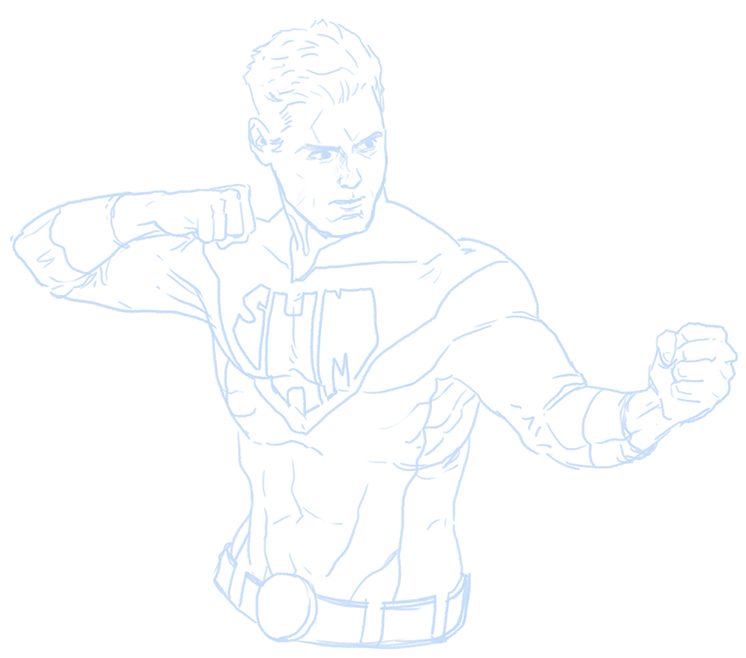
And then, hither'southward Super Hero Man, just your archetype superhero guy in tights, ready to be inked up. I've drawn him on a 10.25" x 8.25" canvas with a 10" x 8" Binding Size at 600 DPI.
For the Pencils, I used a Greyness Layer, and my Perfect Pencil. I then set the Pencil Layer to Blueish using the Layer Properties Panel and decreased the Opacity to 30% and so I could see my inks a piddling meliorate.
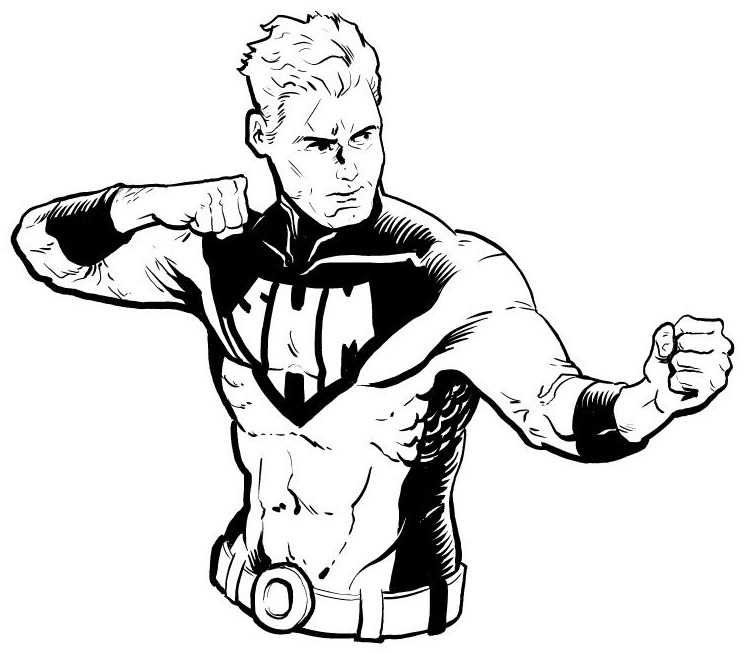
Here'due south the commencement inking example! This one with the Bharat Ink Polish Brush. As you tin can see, this brush has a ton of line weight variance, which works great in some areas, only can be harder to control in tighter detail areas. This castor really sings in the broad strokes, and gets overnice variance on the side facing the calorie-free.
Speaking of which, yous can tell that I've tried to establish a light source at the top right of the drawing, since the lines on the right of his face and arm are much thinner than the lines on the left of his face and nether his arms.
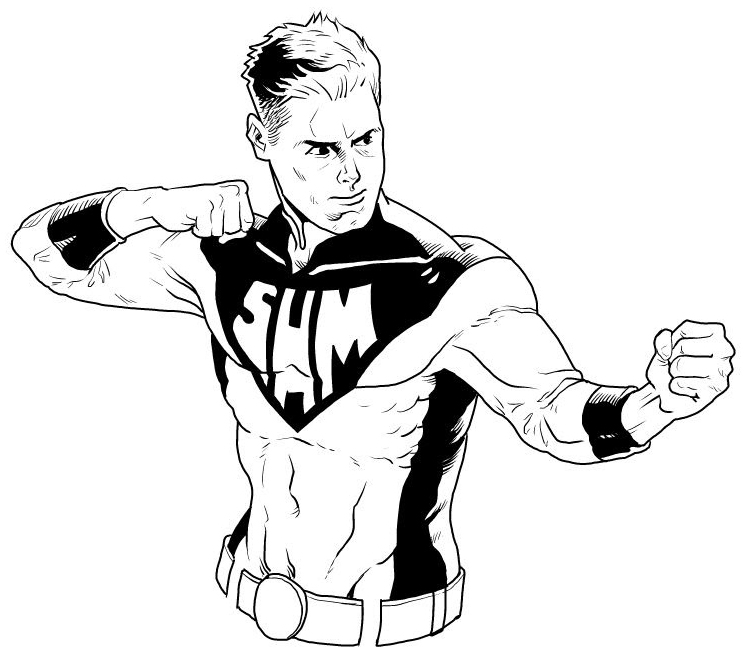
The Yard-Pen, on the other hand, has some really nice well-baked lines. The feathering here is much smaller and tighter than the brush. Notice also, how I've spotted the blacks on the left side of his pilus, so you lot tin tell that information technology'southward nighttime. I've too left a space at the far left side of that hair open for some squeamish rim lighting.
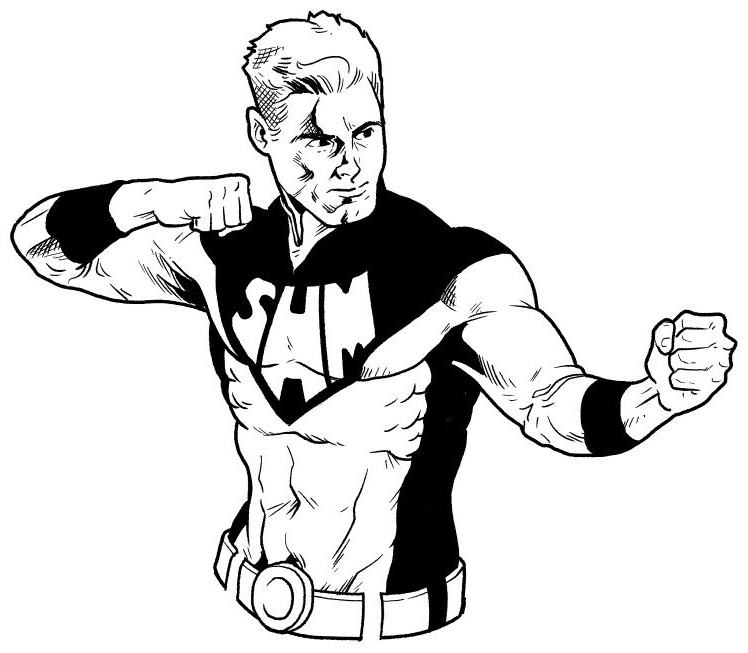
With the multiliners, I tried to use a few unlike tools to get the results I was looking for. I did an outline around the unabridged character commencement, in the 0.iii, then switched to the 0.i pen to do some detailing work. I tried to focus on hatching in this one, really getting some deeper shadows in his armpits and on one side of his face.
I likewise completely blacked out the black parts of his costume for a more iconic look, every bit opposed to rendering the calorie-free reflecting off of it.
And finally, these tools are really just that: tools! Yous can absolutely mix and match them, similar I did in this last version. I liked how the India Ink Smooth Brush was able to get nice sweeping lines, so I apply it for the outlines of his torso. The G-Pen was able to become me some bully details, so I used that for a lot of his face up and muscle rendering. And then I used the Multiliners for different parts of his costume, so that would take a little more manufactured feel, since the lines were more even.
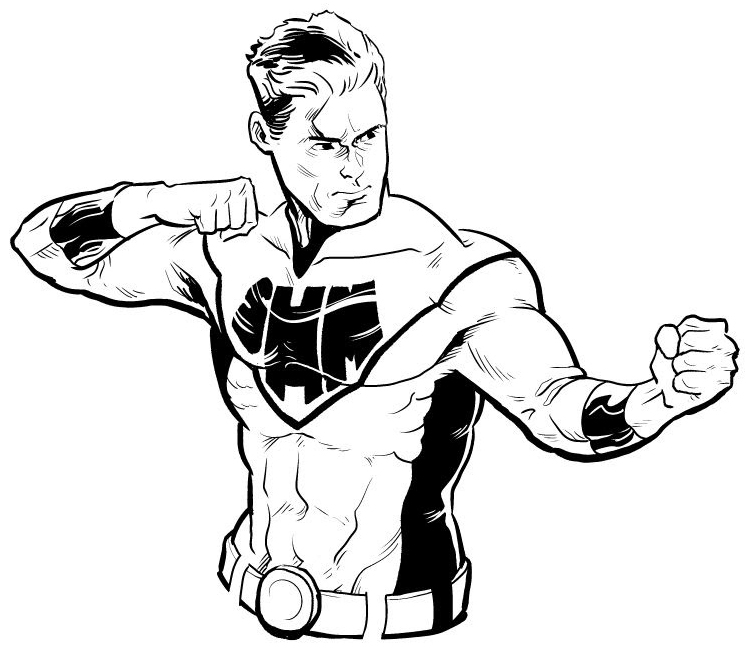
Each tool has a different experience, creating a different look in your final cartoon, which is really interesting! How you apply them is up to you lot!
If you want a deeper swoop on this, be sure to bank check out the video I've made to get forth with this article, with some tips and timelapses of the inking demos.
At present, become out there and brand some smashing comics!
Source: https://www.clipstudio.net/how-to-draw/archives/159080

Post a Comment for "How to Ink in a Comic Book Art Style"